
How the Ballon d'Or Winner Is Decided: Criteria & Voting System Explained (2026 Update)
The room was lit and colorful, as everyone dressed in expensive suits, rose to their feet in thunderous applause, chanting “Harry! Harry!” Finally, an England captain who had spent years of his football career being labelled unlucky had lifted the Golden Ball.
Harry Kane became the first Englishman to win the Ballon d’Or since after Liverpool’s Michael Owen 25 years ago, Kane was crown the winner ahead of France’s Kylian Mbappé and Spanish Lamine Yamal at a gala in London. Since the announcement, I’ve seen heated arguments across social media. While some football fans believe Kane truly deserved the award, others have questioned the credibility of the voting system.
But how is the Ballon d’Or winner actually decided? Do goals and trophies determine the outcome, or does the voting system consider other factors? To truly understand why the award landed on Harry Kane this year and why the award will continue to spark debate every year, let's break down the criteria, voting process and points system behind this football's most prestigious individual award.
Listen, I get it, every year the same questions erupt in the mouths and hearts of many football fans around the world. Questions like: who actually picks the winner? Is it the fans or players? Maybe a secret committee in Paris and how does the voting systems truly work?
I've followed this prestigious award for quite a long time, and the real answer to who decides the ballon d’Or winner is more structured, and organized with specific rules and criteria than most football fans actually presume. So let me walk you through on how the Ballon d'Or winner is decided and then look at what happened at this year’s 2026 Ballon d’Or.
Who picks the winner of the Ballon d’Or?
For the impatient, the Ballon d'Or winner is decided by a panel of sport journalists from different countries around the world. Each journalist receives a list of 30 nominated players, they are expected to rank their top 10 players using the traditional Ballon d’Or scoring system. Each position on a journalist's list carries a specific number of points. the player with the most points across all ballots submitted by the journalists wins the award.
It therefore means that fans, players, coaches and sport officials are not involved in the process of selecting a Ballon d’Or winner.
If at this point you decide to stop reading, you are miles ahead of most football fans on social media. But believe me when I say the juicy part is in the details, so let’s continue.
What Is the Ballon d'Or Anyway?
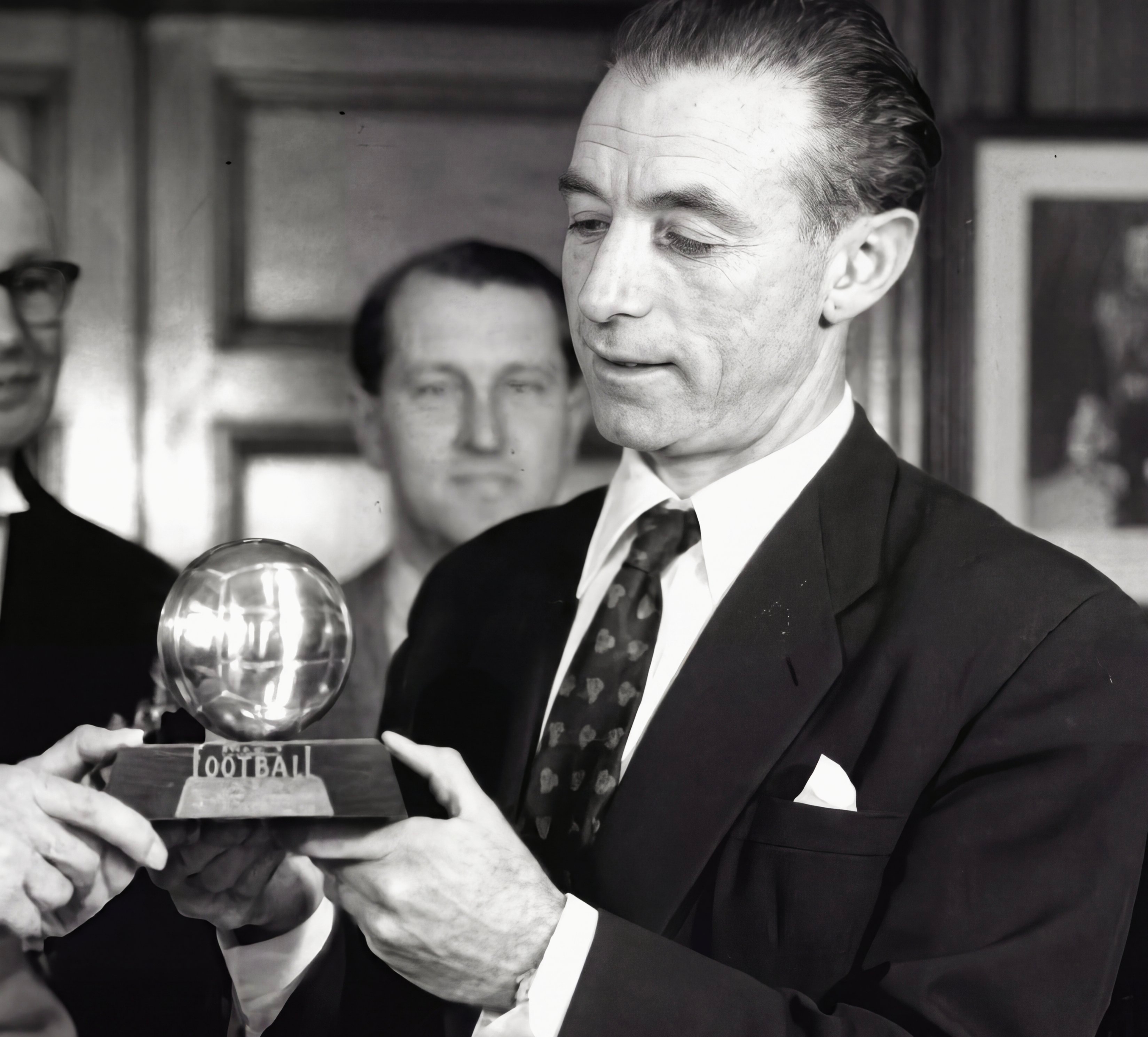
The Ballon d'Or is a French phrase meaning "Golden Ball." It is widely regarded as one of football's most prestigious individual awards, recognising players for their incredible and outstanding performances. Created by France Football in 1956, the award's first winner was English football legend Stanley Matthews. As the ceremony returns in 2026, it marks 70 years since Matthews made history as the inaugural recipient of the Golden Ball.
The Ballon d’Or is separate from FIFA’s own individual football awards. It has its own organisers, voting jury, and selection criteria even though both of them base their criteria on outstanding performance. The award is organised by France Football in collaboration with UEFA, which became a co-organiser in 2024.
Who Actually Votes for the Ballon d'Or?
This is the part that’s most confusing for some football fans. The winner of the Ballon d’Or isn't chosen by a public vote, fans, players or coaches. It's decided by an International jury of specialized football journalists.
For the men's category of the award, the jury includes one journalist from each of the top 100 countries in the FIFA men's ranking. The women's award uses the top 50 countries in the women's ranking. I like to think of it as a micro United Nations of comprising of football journalists. One person from each countries of the world with a simple task
Why Only the Top 100 Countries in FIFA ranking?
Since 2022, Voting for the Ballon d’Or award has been limited to the top 100 countries in the FIFA ranking to avoid "odd" or unjustified votes from countries lower in the rankings. It’s also a way the organizer are using to control the quality of votes because a few strange ballots can swing a tight race, and organizers are not ready to take that risk.
What About Fan Polls?
Don’t believe everything you read on the internet. The claim that fans hold 25% of the vote or that captains hold 50% is completely untrue. According to the organizers, voting is restricted to journalists only.
What Counts as a Season?
The Ballon d’Or evaluates players over a specified performance period rather than simply looking at their performances from January to December. For the 2026 Ballon d’Or, players were assessed on their performances between August 3, 2025, and July 19, 2026. This means their achievements during that period formed the basis of their candidacy.
The 2026 window of the Ballon d’Or included the World Cup, so a player's 2025-26 club season and their performance in the 2026 FIFA World Cup both landed in one story. A big tournament like the World Cup, Olympics, etc can lift a candidate or sink one.
The Key Ranking Criteria
There are three key criteria the Ballon d’Or jury considers when deciding who deserves to win, ranked from most important to least important.
Individual performances: This is the big one and most important criterion. How well did the player perform individually? The jury considers their goals, assists, consistency, influence on matches and overall quality of play. Talking about goals, the jury looks at decisive goals. Goals in the 89th minute, the assist in a semi-final, the save when everything's falling apart.
Team Success and Titles won: How well did the player's team perform? Did they help their club or national team win major trophies, such as the Champions League, Premier League, or World Cup? Team success matters, but winning trophies alone does not guarantee the award.
Class and fair play: The jury also considers the player's behaviour on and off the pitch, including sportsmanship, respect for opponents, discipline and fair play.
Why not The Player with The Highest Goals
Because the award isn't simply for the player with the most goals, assists or trophies. The juries or journalists must weigh a candidate's complete performance throughout the season under review.
That's why there’s a possibility for a midfielder or even a defender to beat a striker with a huge number of goals and whenever that happens, fans who do not understand how the voting system work lose their minds completely.
How the Voting Works, Step by Step
1. The nominees are revealed.
The 2026 list had 30 nominees, recognized for the 2025-26 season.
2. Each journalist gets the official list.
They are not allowed to add new nominees.
3. They choose 10 players on enlist of nominees and rank them from first to tenth.
4. Points are assigned by rank: More on that below.
5. All 100 ballots are added up. The player with the highest total number of points wins.
The Points Table
The ten ranked players get 15, 12, 10, 8, 7, 5, 4, 3, 2 and 1 points respectively.
|
Rank on the ballot |
Points |
|
1st |
15 |
|
2nd |
12 |
|
3rd |
10 |
|
4th |
8 |
|
5th |
7 |
|
6th |
5 |
|
7th |
4 |
|
8th |
3 |
|
9th |
2 |
|
10th |
1 |
NOTE: Some platforms adds a "6" in the middle of the table. That would make eleven numbers for ten places, so I will assume the ten-value version above as correct. Check the official Ballon d'Or website before you publish your own numbers.
Why the First Place Is Worth So Much
Look at the jump from 15 points for first place to 12 for second. That's a three-point difference. Now compare ninth and tenth, where the gap is just one point. The message is clear: not all votes carry the same weight.
A first-place vote can make a significant difference in the final standings, which is why a player who tops many journalists' ballots can finish ahead of someone who appears consistently across ballots but rarely makes the top three. In the Ballon d'Or race, being everyone's second or third favourite doesn't always beat being the clear first choice of most of the journalists.
What Happens If There's a Tie?
It's rare, but there's already a laid down procedure for a scenario of that nature. The first tiebreaker is the number of first-place votes received. If that's level too, second-place votes are compared, then third-place votes, and so on until the tie is broken. That’s it, simple and straightforward.
How Harry Kane Won in 2026
Harry Kaney held off stiff competition from talented players like Lamine Yamal and Kylian Mbappé to take the men's award. He played for Bayern Munich, and the prize came after a historic season for club and his international duties for his country England.
What the Award means for Harry Kane
He ended a long English wait. He's the first Englishman to win since Michael Owen in 2001.
The numbers were huge. He scored 73 goals for club and country during the campaign and described it as the best of his career.
The race was open. It was described as a wide-open race for the men's award.
The winners keep changing. The award has now gone to five different players in five years.
Why His Season Fits the Criteria
I don't have access to the voters' ballots yet, so I can't tell you what each journalist was thinking. But lets take a look at how his season lines up with the three criteria:
Individual performance: 73 goals in a season is the kind of decisive and impressive output journalists or juries are told to reward.
Team success: a strong club and international campaign, which is where criterion two comes in.
Class and fair play: no real controversy attached to his name, which helps in a close vote.
Kindly take that as my understanding of the criteria, not as the official reasoning. The full points totals and country-by-country votes are usually published afterward, and they'll show how tight it really was.
A Messy Night in London
The ceremony itself wasn't smooth. The official website published winners' articles before the announcement, which was called a huge error. And the start was delayed, with reports giving different lengths: ESPN's live coverage said 30 minutes, while its recap said 45, due to traffic and congestion around the Palladium. It's a reminder that even a precise voting system can be wrapped in a chaotic evening.
Breakdown of Ballon d’Or 2026 Votes: The Top 10
Common Myths around the Ballon d’Or
Myth 1: Fans also votes
Not at all. Fans only argue and debate. Journalists from 100 countries do the voting.
Myth 2: The winner has to win the Champions League or World Cup.
Although trophies count as the second criterion. They aren't a necessity or requirement.
Myth 3: Goals decide everything.
Goals are part of "individual performance" which is of high importance but that doesn’t settle it all alone.
Myth 4: It's decided in secret
The organizers run the process, but the result comes from ballots submitted by 100 journalists from different countries that are tallied and later published.
Myth 5: It's the same as FIFA's best player award.
Absolutely not. Different organizers, different jury and different rules.
Does the Women's Ballon d'Or Work the Same Way?
Mostly, yes. The big difference is the panel size, which is 50 journalists instead of 100. The three criteria and the journalist-ranking idea are the same.
In 2026, London City midfielder Alexia Putellas claimed the women's prize for a third time. She beat the likes of Ewa Pajor and Melchie Dumornay in an award dominated by Aitana Bonmatí for the previous three years.
Other Trophies Handed Out on the Night
The Ballon d'Or isn't a solo act. The ceremony also hands out awards such as the Yashin trophy for best goalkeeper and the Kopa trophy for best young player, plus awards for the best coach and best club.
Why the System Still Works
I don't think any voting system could make everybody happy. Football is too messy. A striker, a keeper and a midfielder can all have "the best season" in totally different ways.
But the structure is solid: a global panel, clear criteria, a scoring table that rewards conviction, and published results. And the arguments are part of the fun. If every winner were obvious, nobody would talk about it for a year.
Breakdown of Ballon d’Or 2026 Votes
These are the top 10 male players in the 2026 Ballon d’Or rankings.
1. Harry Kane, 1,055 points
2. Kylian Mbappé, 1,027 points
3. Lamine Yamal, 881 points
4. Rodri, 726 points
5. Lionel Messi, 612 points
6. Khvicha Kvaratskhelia, 541 points
7. Ousmane Dembélé, 418 points
8. Erling Haaland, 378 points
9. Michael Olise, 296 points
10. Fabian Ruiz, 201 points
Frequently Asked Questions
Who won the 2026 Ballon d'Or?
Harry Kane won the men's award, beating Kylian Mbappé and Lamine Yamal. Alexia Putellas won the women's award.
Who decides the Ballon d'Or winner?
An international jury of specialized journalists. For the men's award, it's one journalist from each of the top 100 FIFA-ranked countries.
How many players does each journalist vote for?
Ten, ranked from first to tenth, from a shortlist of 30.
How many points does a first-place vote get?
Fifteen. Second gets 12, third gets 10, and so on down to 1 point for tenth.
What are the Ballon d'Or criteria?
Three, in order of importance: individual performance, collective performance and titles, and class and fair play.
What if two players finish on the same points?
The player with more first-place votes wins. If still tied, second-place votes are compared, then third, and so on.
Can fans vote?
No. Fan polls may exist online, but they don't affect the official result.
Which period was judged for 2026?
August 3, 2025 to July 19, 2026.
Where was the 2026 ceremony held?
At the London Palladium, the first time it has been held outside France.
Final Thoughts
So, how is the Ballon d'Or winner decided? In short: 100 journalists, 10 ranked picks each, a points table from 15 down to 1, and three criteria that put individual brilliance first.
In 2026, that process handed the trophy to Harry Kane, ending a 25-year wait for an English winner. Whether you cheered or fumed, the system did what it's built to do: turn a year of football into a single, arguable answer.
Now it's your turn. Was Kane the right pick, or should it have been Yamal or Mbappé? Tell me in the comments, and send this to the friend who still thinks fans decide the winner.
Albert Akpama (Albertflex) is a tech guru, football enthusiast and sports writer that’s passionate about making football predictions easier to understand. He focuses on match analysis, prediction strategies, bookmaker reviews and betting insights, helping readers understand the key factors that influence football match results. At 1Banter, Albert combines his passion for football with a practical, evidence-based approach to analysing matches.
All author postsRelated posts
-
The Role of No. 10 in Football: Top 10 Best Number 10s in Football Today
The No. 10 is football's most romantic job. Here's what the ro...
0 Comments
- No comments yet. Be the first to share your thoughts.
Login to post a comment.