
How to Become a Professional Footballer: A Step-by-Step Guide
Playing professional football for a living is one of the most popular dreams on the planet, and it's easy to see why. Take a few seconds to picture yourself walking through tunnel, the roar, the studs clicking on concrete, and your name on the lips of thousands of football fans. Its purely sensational. Now let’s get back to reality and discuss facts on how a complete beginner can get on that stage.
First, its important to know that talent alone rarely gets you there. I've watched plenty of gifted kids fade away because they lacked discipline, exposure or the right people to guide them through the genuine route to follow. Becoming a professional footballer takes consistent training, tactical understanding, resilience, opportunity and a decent support system.
Let me be blunt with you, there's no guaranteed or 100% sure route to becoming a professional footballer. Some individuals or organisations exploit young players’ dreams by making unrealistic promises of professional contracts in exchange for money. You need to be extremely careful with people like that. Although I said success isn't guaranteed, however, certain actions can significantly improve your chances of becoming a professional footballer. The sole purpose of this write up is to provide practical advice and actionable steps to help you pursue that football ambitions.
Key Takeaways
• No one can guarantee a professional contract. Talent, training, exposure and opportunity all matter, so be wary of any academy, coach or agent who promises one.
• Clubs judge more than technique. Scouts also watch decision-making, consistency, attitude and how you perform under pressure.
• Match experience gets you noticed. Regular competitive games, a short highlight video made from real footage and legitimate trials all make you easier to scout.
• Academies are the main route, but not the only one. Local clubs, amateur and semi-professional leagues and open trials can also lead to a pro career, and late starters can still make it with a focused plan.
• Verify before you pay. Check any trial, academy or agent directly with the club or the governing body, and never pay for a “guaranteed” move abroad.
What Does It Take to Become a Professional Footballer?
Before you chase a football career, its important to have a clear understanding of what clubs are actually looking for. Here's the short version.
|
Area |
What clubs look for |
|
Technical ability |
Ball control and first touch, passing accuracy, dribbling and ball retention, shooting and finishing, defensive awareness |
|
Physical fitness |
Speed and acceleration, stamina, strength and balance, agility and coordination |
|
Tactical understanding |
Knowing formations, when to press, defend or attack, positional awareness, decisions under pressure |
|
Mental strength |
Confidence, concentration, handling criticism and rejection, discipline, composure in big moments |
Note this, players aren't judged on technique alone, coaches also watch your decision-making, consistency, attitude and how your input or impact on thr team. A flashy dribbler who never tracks back or create scoring chances isn't as appealing as you'd think.
1. Start Playing Football at an Early Age
Starting your football career at an early age is very helpful in becoming a professional footballer. Kids who get regular football in their legs early, usually pick up technique faster that’s why most academies tend to recruit children from around the age of six (6). However, starting early doesn't guarantee anything, plenty of kids who start at five drop off before they even get to sixteen.
What really important at this stage is for you to:
• Play regularly, in the street, at school, at a local club and just anywhere
• Learn the basic skills like passing, controlling, dribbling, shooting
• Take part in school competitions
• Play against different opponents, bigger, older, skilled and quicker ones
• Fall properly in love with the game
That last point matters more than most people admit. If football feels like homework, you won't survive the grind. You need to genuinely love the game.
What If You Started Late?
You can still do it as a late beginner but honestly be prepared to put in a lot of work and pay the ultimate price. Jamie Vardy was released by Sheffield Wednesday as a teenager, worked his way through non-league football, joined Leicester City in 2012, and won the Premier League in 2016. Ian Wright signed his first professional contract with Crystal Palace in his early twenties. Late starters need a more focused and organized plan - sharper training, more match time and honest feedback on what needs fixing.
2. Choose Your Position and Own It
You don't need to lock yourself into one position at an early age but understanding what each role demands helps you choose where you will best fit in and train smarter.
|
Position |
Important qualities |
|
Goalkeeper |
Reflexes, positioning, communication and distribution |
|
Centre-back |
Strength, anticipation, tackling and aerial ability |
|
Full-back |
Speed, stamina, defending and crossing |
|
Defensive midfielder |
Awareness, tackling, positioning and passing |
|
Central midfielder |
Vision, ball control, passing and work rate |
|
Attacking midfielder |
Creativity, movement and decision-making |
|
Winger |
Pace, dribbling, crossing and finishing |
|
Striker |
Movement, positioning, finishing and composure |
The goal here is to know your preferred position and own it while also staying flexible because coaches move players around all the time. A left-footed winger who can also play wing-back suddenly has more opportunities to feature in a team. V Ultimately, on the quest to becoming a professional footballer, versatility is a quiet superpower.
If you're curious about how roles like the playmaker work, our guide to understanding the number 10 position is a good place to start.
3. Train Consistently and Develop Your Skills
This is where the work happens. Let's break it into four parts.
a. Technical Training
• Practise passing with both feet
• Improve your first touch and ball control
• Work on dribbling and close control
• Shoot from different positions and angles
• Train your weak foot until it stops being weak
b. Physical Training
• Sprint training for pace and acceleration
• Endurance work (intervals, small-sided games)
• Strength and conditioning, supervised if you're a teenager
• Agility drills: ladders, cones, quick turns
• Flexibility and mobility work to stay injury-free
c. Tactical Training
This one gets ignored most of the time and it shouldn't.
• Watch professional matches and watch off the ball
• Study players in your position
• Practice positioning and movement
• Train yourself to decide faster
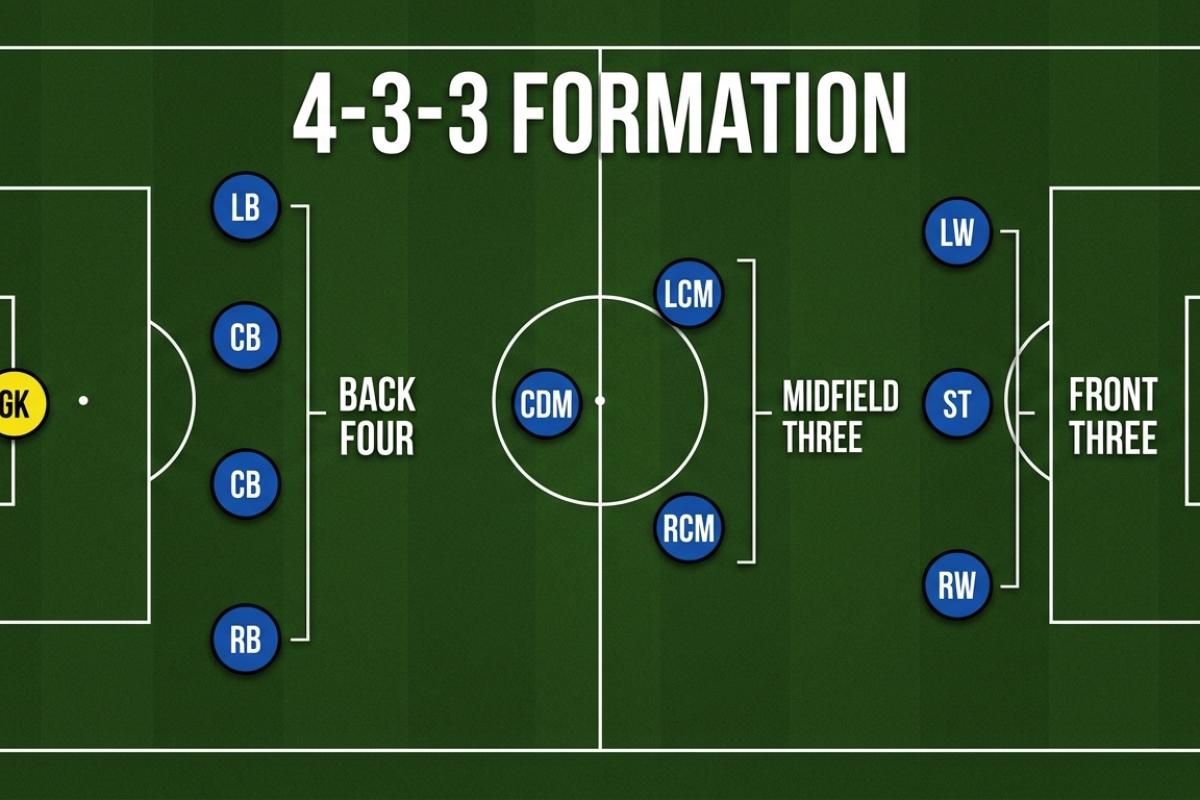
• Learn different systems, starting with understanding football formations, and how teams use counter-attacks and press
d. Build a Weekly Training Routine
Here's a sample week for a developing player. Adjust it for your age, level and club commitments.
|
Day |
Focus |
Time |
|
Monday |
Ball mastery, first touch, weak-foot passing |
45 mins |
|
Tuesday |
Team training |
90 mins |
|
Wednesday |
Speed, agility and core strength |
45 mins |
|
Thursday |
Team training and tactical drills |
90 mins |
|
Friday |
Light recovery, mobility, watch a match |
30 mins |
|
Saturday |
Match day |
90 mins |
|
Sunday |
Rest, or a casual kickabout |
Flexible |
Rest isn't laziness, your body needs to refresh, heal and actually get better.
4. Join a Football Academy or Local Football Club
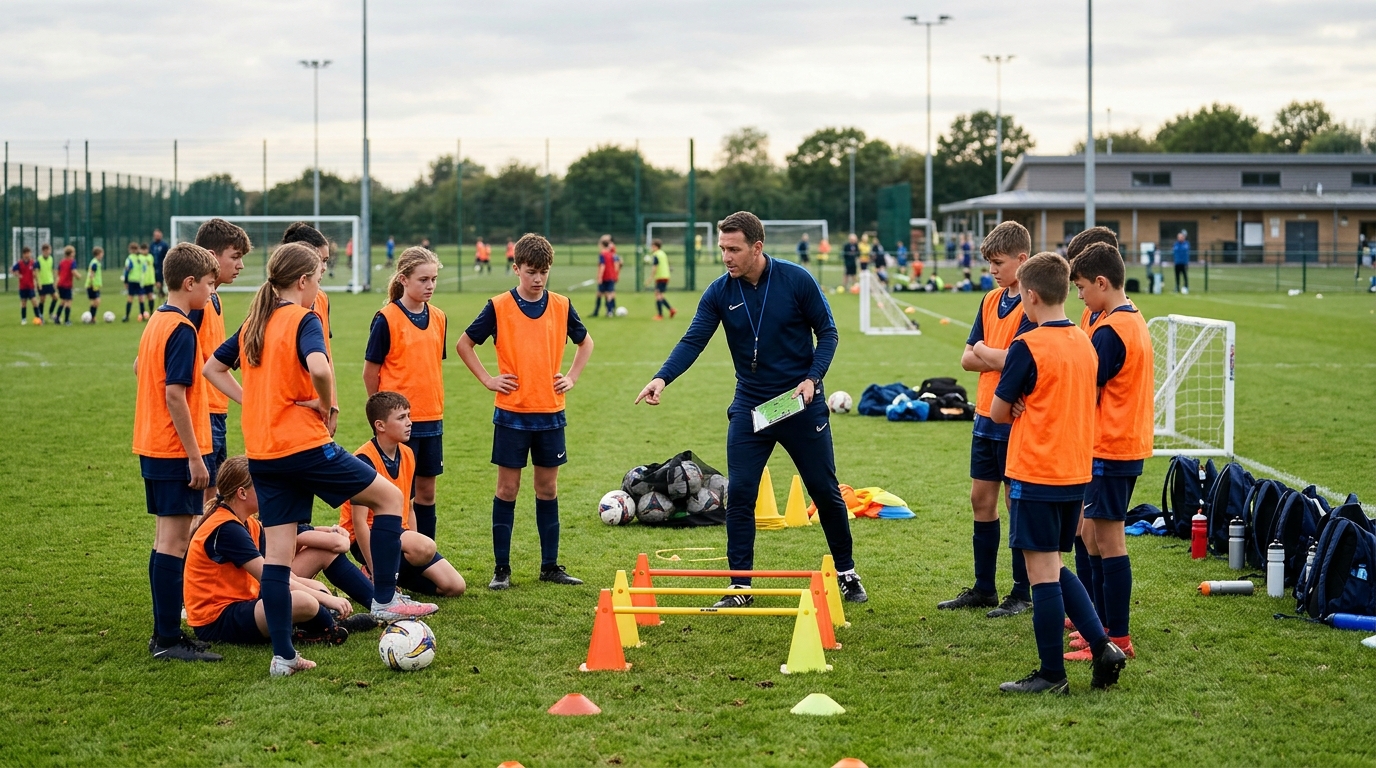
Individual practice without proper coaching, competition and guidance, has its limitations. A well-structured environment, such as a football academy or local club, provides opportunities that solo practice cannot easily offer.
• Qualified coaches who spot and fix your habits
• Regular training sessions
• Competitive matches
• Professional development and feedback
• Exposure to scouts and clubs
• Tournaments you'd never enter by yourself
How to Choose the Right Football Academy
Not every football academy is worth your time and investment. That is because some academies are brilliant while some are businesses with a nice logo. Before you commit, I suggest you look out for the following:
• Reputation and coaching standards. Are the coaches properly qualified?
• Competition. Do its teams play in organised leagues and tournaments?
• Track record. Has it actually developed players, and can you verify where they went?
• Fees and requirements. Get everything in writing and understand what you're paying for
• Promises. Walk away from any academy that guarantees a professional contract or a European connection.
That last point is non-negotiable. Nobody can guarantee a contract, not an academy, not a coach and also not an agent.
5. Play Competitive Football
Training is the rehearsal but matches are the real deal. You can't fully learn how to handle pressure, read a game or recover from a mistake in trainings.
So play as much competitive football matches as you can:
• School competitions
• Local club fixtures
• Amateur leagues
• State and regional tournaments
• Games against stronger, older or quicker opponents
Competitive matches let you display your ability, sharpen your decision-making and understand what organised football truly demands from a football player. Playing against more experienced players is uncomfortable and that's exactly what you need.
6. Get Noticed by Football Scouts
This is the part everybody is in haste to read. Fair enough its also the part where most young aspiring footballers get it wrong.
Football scouts watch matches at all levels: school, grassroots, amateur and academy football. They're trying to answer one question: could this player develop into someone our club can use?
What Exactly Do Football Scouts Look For?
• Technical ability
• Tactical intelligence
• Physical attributes
• Decision-making
• Consistency not just one great game
• Attitude and coachability
• Performance under pressure
Notice how many of those attributes aren't about skill. A football player who sulks after a mistake can undo a brilliant first half performance.
How to Increase Your Chances of Getting Scouted
1. Play in organised competitions where scouts actually turn up
2. Attend legitimate football trials
3. Join reputable academies with competitive connections
4. Create a short football highlight video
5. Keep an accurate player profile
6. Make your performances easy to evaluate with a clear position, shirt number and match footage
Warning: Be verybareful with anyone parading himself to be a scout who asks for large sums of money in exchange for guaranteed trials, contracts or "European opportunities". Genuine clubs and scouts don't charge you to be seen.
7. Attend Football Trials and Impress Coaches
A trial is a short window to show who you are. Prepare for it like you are preparing for a job interview with boots on.
Before the Trial
• Research the club or academy
• Understand the trial requirements
• Get in good physical shape
• Rest properly the night before
• Prepare any documents you need (ID, medical forms, registration papers etc)
During the Trial
• Play your position and play it well
• Make smart decisions
• Talk to your teammates
• Show confidence without being selfish
• Follow instructions
• Show discipline and teamwork
After the Trial
• Ask for feedback, politely
• Learn from your mistakes
• Keep training
• Follow up professionally where appropriate
Not being picked doesn't necessarily mean that you lack potential. Sometimes, trials can hinge on who else showed up, the team's needs at that period or just a bad day. The process of developing into a professional footballer is full of setbacks. The players who strive through those setbacks treat them as information.
8. Build a Football CV and Highlight Video
Just like any other job, you’d send a CV and hope for an interview. Football isn’t different. You need to create a professional CV to send to clubs and anyone that needs it.
What to Include in your Football CV
• Full name and age
• Nationality
• Height and preferred foot
• Primary and secondary positions
• Current club or academy
• Playing experience
• Competition history
• Contact information (a parent or guardian's if you're under 18)
What Should Your Highlight Video Show?
• Ball control
• Passing and vision
• Defensive contributions
• Dribbling
• Goals and assists
• Movement without the ball
• Match awareness
Keep your highlights video short and clear and use real match footage. Don't pad it with filters and music. A coach has a hundred of these to watch. It is also important to keep a full-match recording of a match you participated in because it shows what you do when you don't have the ball, and that's often more telling.
9. Find a Licensed and Experienced Football Agent or Representative
An experienced football agent can help you navigate professional opportunities. A good one:
• Connects players with clubs
• Negotiates contracts
• Advises on career decisions
• Handles professional opportunities
A bad one can wreck a career, so be careful:
• Verify credentials. FIFA and national associations regulate agents, so check their registration with the relevant body
• Understand the representation agreement before signing anything, ideally with a lawyer or trusted adult reading it too
• Involve trusted adults if you're young
• Never trust someone just because they promise you a European contract
Most young players don't need an agent atleast not until clubs start showing interest on you. But before then, focus on playing and improving your game.
10. Maintain Discipline On and Off the Pitch
Professional football is a lifestyle built around performance. Although at first it seems boring but its effective enough to get you where you are going.
Nutrition
• Eat balanced meals
• Get enough protein and carbohydrates
• Stay hydrated
• Avoid unhealthy eating habits
Recovery
• Sleep enough (teenagers generally need more than they get)
• Schedule recovery time
• Follow injury-prevention routines
• See qualified medical support when injured, rather than playing through it
Lifestyle and Discipline
• Manage your time between football, school and family
• Avoid distractions that hurt your performance
• Keep a positive attitude
• Respect coaches, teammates and opponents
• Stay committed to long-term development
For specific nutrition and strength plans, ask a registered sports dietitian or qualified coach instead of copying an what you read or watch on the internet.
Can You Become a Professional Footballer Without Joining an Academy?
The straight forward answer is YES. Although It's harder to find the door, but then the doors actually exists. Academies give you structure and exposure but that doesn’t mean they are the only route in. Alternatives include:
• School football competitions
• Local football clubs
• Community tournaments
• Amateur and semi-professional leagues
• Open trials organised by legitimate clubs
• Direct scouting through strong competitive performances
Jamie Vardy's journey through non-league football stands as a notable example. Performing consistently in front of the right eyes can matter as much as joining an academy.
How to Become a Professional Footballer in Nigeria
Nigeria produces an enormous amount of football talent, and the competition is fierce. Here's a practical roadmap for Nigerian players.
1. Join a reputable academy. Ask around: what leagues do they play in, and which players have actually moved on?
2. Play in state and local competitions. State football associations and local tournaments are common places to be seen
3. Play for grassroots clubs to get regular match experience
4. Explore youth development programmes, including those run by clubs and recognised football bodies
5. Attend legitimate trials organised by clubs, and verify them first
6. Build connections through coaches and recognised football networks
7. Get your documentation in order. A valid passport and age documents matter when opportunities abroad appear, and rules on international moves for young players are strict
Victor Osimhen came through a Lagos academy before moving to Europe after Nigeria's 2015 Under-17 World Cup win, and Wilfred Ndidi also developed in Nigerian academy football before joining Genk. Exact routes vary, but both show that local development can lead onto a bigger stage.
Academy vs Grassroots vs Amateur vs Professional Club
|
Type |
What it is |
Best for |
|
Academy |
Structured youth development, usually with age groups, qualified coaches and organised matches |
Developing skills and gaining exposure |
|
Grassroots club |
Community-level football, often local and affordable |
Starting out, regular matches |
|
Amateur club |
Players aren't paid as their main job, competition can be strong |
Gaining adult match experience |
|
Professional club |
Players are paid to play, with full-time staff and demanding standards |
Making a career |
Warning: In Nigeria mostly and elsewhere, scammers target talented and hopeful young players. Verify trials with the club directly, check an agent's registration and never pay for a "guaranteed" European move.
Common Mistakes to Avoid When Pursuing a Football Career
1. Relying on natural talent without consistent training
2. Ignoring physical fitness
3. Refusing to learn different positions
4. Focusing only on scoring goals
5. Neglecting education and personal development
6. Paying fraudulent agents or trial organisers
7. Giving up after rejection
8. Ignoring injuries and recovery
9. Not getting enough competitive match experience
10. Expecting overnight success
Read that education point over and over again till it sinks in. Most players won't have a lifelong playing career, so school and skills outside football are a safety net not really a distraction as most people claim.
Frequently Asked Questions
What age is best to become a professional footballer?
There's no single best age. Many academies recruit children from around eight or nine, and many professionals sign their first professional deals in their late teens. Starting early helps, but it's not a requirement.
Can I become a professional footballer at 18?
It's possible, but you'll need to move quickly. Focus on competitive adult football, get exposure through semi-professional or amateur leagues, attend legitimate trials, and consider college or overseas routes where relevant.
Can I become a professional footballer without an academy?
Yes. School, club, amateur and semi-professional football can all lead to scouting. You'll need to create your own visibility with strong performances, match footage and legitimate trials.
How do I get scouted by a football club?
Play in organised competitions, attend legitimate trials, join reputable academies, build a highlight video, and make your performances easy to evaluate. Consistency matters more than one standout game.
How many hours should I train to become a professional footballer?
There's no magic number. What matters is quality, consistency and recovery. A combination of team sessions, individual practice, physical work and a match each week works for many players. More isn't always better, and overtraining causes injuries.
Do professional footballers need agents?
Not always, and rarely at the start. Many players get an agent when clubs begin showing interest. If you choose one, verify their registration and understand the agreement before signing.
Can I become a professional footballer without natural talent?
Honestly, talent helps, and pretending otherwise isn't fair to you. But "talent" is partly trainable: touch, decision-making and fitness all improve with work. Hard work can raise your ceiling, though nobody can promise where that ceiling is.
How can I join a football academy in Nigeria?
Research reputable academies, check their league participation and track record, attend their open trials, and ask local coaches for recommendations. Confirm everything before paying any fee.
Do football academies guarantee professional contracts?
No. No legitimate academy can. A guarantee is a red flag.
Is it possible to become a professional footballer if I start late?
Yes, but it demands a more focused plan: more match time, expert feedback, good fitness and realistic goals. Late starters exist at several levels of the game.
Final Thought
Here comes my final note to you. Becoming a professional footballer is a long term game. Talent may open the door but discipline, steady improvement, match experience, good opportunities and resilience are what will lead you through it.
So start with what you have, train consistently, find a competitive environment, ask for feedback and use it. Keep developing and improving yourself even when nobody is watching.
Now it's your turn. Where are you on this journey: just starting, in an academy, or grinding through the amateur leagues? Drop a comment, share this with a teammate who needs the push, and tell me which step you're tackling first.
Albert Akpama (Albertflex) is a tech guru, football enthusiast and sports writer that’s passionate about making football predictions easier to understand. He focuses on match analysis, prediction strategies, bookmaker reviews and betting insights, helping readers understand the key factors that influence football match results. At 1Banter, Albert combines his passion for football with a practical, evidence-based approach to analysing matches.
All author postsRelated posts
-
What Is a Counter-Attack in Football? Meaning, Tactics and Examples
Discover what makes a successful counter-attacking team, from...
-
How to Beat a 4-3-3 Formation: 5 Tactical Strategies That Work
How to beat a 4-3-3 formation? Five proven tactical strategies...
-
What Is a Brace and Hat-Trick in Football? Key Differences Explained
Brace and hat-trick in football explained: what each term mean...


0 Comments
- No comments yet. Be the first to share your thoughts.
Login to post a comment.