
What Is a Brace and Hat-Trick in Football? Key Differences Explained
Picture this, the score board is showing 2-0 your team is leading, both goals scored by your highly skilled number 9. The whole stadium is starting to whisper the word but nobody says it out loud, because that would jinx it. Then the ball drops to him inside the box and the entire stadium is silent like a ghost just passed, everyone holds their breath.
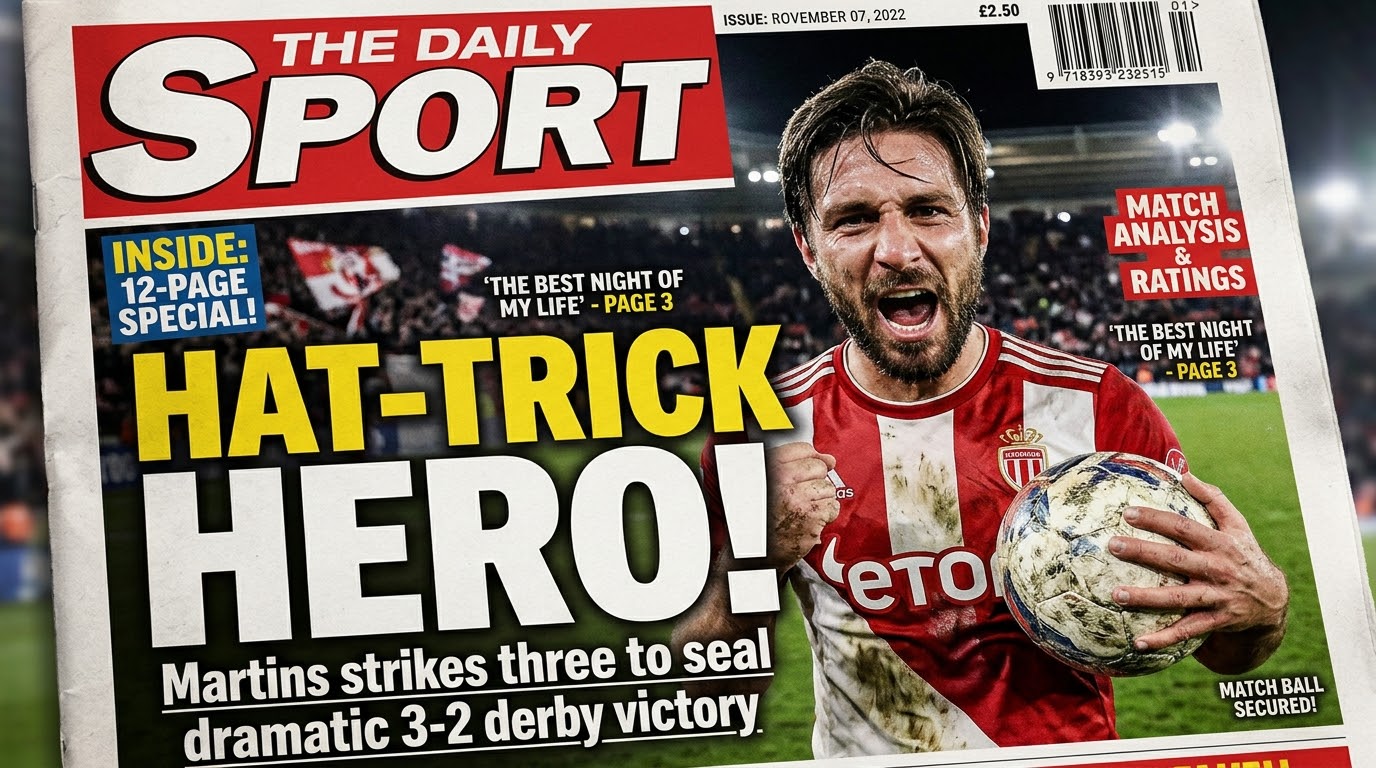
The tension at this moment is the reason why the brace and hat-trick brings excitement and endless social media banter. They are tiny numbers of goals, two and three but they decide who gets the newspaper headlines the next morning, who goes home with the match ball and sometimes the player of the match award.
If you have ever nodded along when a commentator said "that's a brace for him" or “that’s a hat-trick” while quietly wondering where the word came from, trust me, you are not alone, we’ve all been there at some point in our football journey. The good news is that you are here now. I'll walk you through what each term means, where they came from, how they differ and a few extras that even long-time footballs fans don’t know about.
Key Takeaways
- A brace is two goals by one player in a single match. Think of it as a pair, borrowed from the old word for a pair of hunted birds.
- A hat-trick is three goals by one player in a single match. The term started in cricket in 1858, not in football.
- Hat-tricks come in types. A perfect hat-trick is a left foot, a right foot and a header, while a natural one is three goals in a row with nothing else scored in between.
- Own goals and penalty shootout kicks don't count towards a player's tally, but penalties and extra-time goals do.
- Hat-tricks are rarer than braces. That is why the scorer usually keeps the match ball, and why bookmakers price hat-trick bets at much longer odds.
Brace vs Hat-Trick
For those in a haste, here’s a quick summary of the two:
- A brace is when one player scores two goals in a single match.
- A hat-trick is when one player scores three goals in a single match.
That’s just it guys. Two goals is a brace, three goals is a hat-trick. Everything else in this article is the story, the rules and the little add-ons around those two simple ideas.
|
Feature |
Brace |
Hat-Trick |
|
Goals scored |
2 |
3 |
|
Who scores them |
One player |
One player |
|
Time frame |
Single match |
Single match |
|
Also called |
Double |
Treble (rarely used in football) |
|
How common |
Fairly common for strikers |
Rare, often headline news |
|
Typical reward |
Man of the match talk |
Keeping the match ball |
What Is a Brace in Football?
A brace simply means a player has scored two goals in one game. You will hear pundits say things like "he's bagged a brace" or "a first-half brace puts them in control."
The history of "Brace" in football?
The word is much older than football. In everyday English, a bracemeans a pair of something, and it was traditionally used for hunted game. People talked about a brace of pheasants or a brace of partridges. Sports writers borrowed the idea, since a striker is in a way hunting for goals too. Two goals by a single player is termed a brace.
What Counts as a Brace?
A few small rules come up again and again:
- Both goals must be scored by the same player. Two goals shared between teammates is not a brace.
- The goals can come at any point in the match. One in the first minute and one in stoppage time still counts.
- Penalties count. A spot-kick that goes in is a goal like any other.
- Own goals do not count. If a defender puts the ball into his own net, no attacker gets the credit.
- Goals in a penalty shootout do not count. A shootout is a tie-breaker, not part of the match score.
I have seen and heard heated social media arguments about that last rule. A player scores two in the game, then converts in the shootout, and someone insists he "had a hat-trick." He did not. He had a brace and that’s it.
Why a Brace Matters
A brace is often the deciding signal for man of the match winner. It frequently decides the result and it is a sign a forward is in good form. A striker who scores braces regularly is usually the one winning you points not just adding numbers to a scoreboard.
For fans, it is the moment the match tilts. One goal says "nice." Two says "this is his day." Three says "we will be talking about this for weeks."
What Is a Hat-Trick in Football?
A hat-trick is three goals scored by one player in a single match. It is the headline act, an act that pens down a player’s name on the covers of the sports newspapers the next morning.
The Shocking Origin of "Hat-Trick"
Surprisingly, the term “hat-trick” did not start in football at all. It began in cricket.
The widely told story goes back to 1858. A bowler named H.H. Stephenson took three wickets with three consecutive deliveries. The crowd was so impressed that a collection was made for him, and he was presented with a hat. The phrase stuck, and cricket used it for the feat of three wickets in three balls.
Other sports then borrowed it. Ice hockey uses it for three goals, and football picked it up as well. So the next time you cheer a striker's third, remember you are borrowing a word from a Victorian cricket match.
Do the Three Goals Have to Come in a Row?
The direct answer to that is NO. In football, a hat-trick only needs three goals by the same player in the same match. They can be spread across ninety minutes or even extra time depending on the competition.
However, because of how fun the idea of “hat-track” is, football fans love to split it into types, which brings us to yet another interesting part of this article.
The Different Types of Hat-Trick
This is where the casual fan becomes the person everyone wants on their pub quiz team. There are several named versions of the feat.
|
Type |
What it means |
|
Standard hat-trick |
Any three goals by one player in a match |
|
Perfect hat-trick |
One goal with the left foot, one with the right foot, and one header |
|
Natural hat-trick |
Three goals in a row, with no other goal scored by either team in between |
|
Penalty hat-trick |
All three goals scored from the spot |
|
Away-day hat-trick |
A hat-trick scored in an away game (informal term fans use) |
The Perfect Hat-Trick
This one is a favourite among fans and football analyts. You need a goal with each foot and one with the head. It shows a complete striker, someone who can finish in whatever way the ball arrives. It doesn’t happen often like the standard hat-trick but when it happens, its never a secret, the entire football community will be alerted lol maybe I’m over exaggerating but then everyone will be talking about it.
The Natural Hat-Trick
This one is about timing. If a player scores three straight goals and nobody else scores in between, that is a natural hat-trick. It is a bit like a perfect run of luck and skill landing at once.
Note: some of these label, especially the informal ones are used loosely by fans and commentators. The standard, perfect and natural versions are the ones you will hear most often.
What comes after Hat-Trick?
If three goals deserves a name, four and more should too. Fans have come up with a few names though they are less official.
- Four goals: often called a haul or, in some places, a poker.
- Five goals: sometimes a glut or simply "five-star performance."
- Six goals: occasionally called a double hat-trick, because it is two hat-tricks in one match.
These names are fun and flexible rather than strict rules, so do not be surprised if a commentator uses something different. I tend to just say "four goals" and let the scoreboard do the talking.
Brace vs Hat-Trick: The Key Differences Explained
Now that you know the basics, here is how the two compare in practice.
1. The Number of Goals
This is the obvious one. A brace is two, a hat-trick is three. It only takes one extra goal to move from "great game" to "legend of the day."
2. How Rare Each One Is
Braces happen far more often. Many top forwards score a brace several times in a season. A hat-trick is much rarer, even for elite strikers. Some excellent players go whole seasons without one, which is why it is celebrated so loudly.
3. What It Says About the Match
A brace usually means a player was decisive. A hat-trick often means the player dominated. It tends to come in lopsided games or in moments of brilliance, and it frequently becomes the story of the match.
4. The Traditions Attached
One lovely tradition is that the player who scores a hat-trick usually gets to keep the match ball. Teammates sign it, and it often ends up in a trophy cabinet or on a mantelpiece. A brace gets praise and a pat on the back, but rarely a souvenir.
5. The Betting Angle
Bettors treat them differently, too. Many markets let you back a player to score two or more goals, while hat-trick markets are priced at much higher odds because they happen less often. Always check the exact rules of the operator you use, since some count extra time and others do not. This article explains deeper how to predict braces and hat-tricks correctly.
Famous Hat-Tricks Moments
Stories make these terms exciting and memorable, so here are a few moments that fans would never forget.
- Geoff Hurst, 1966: he scored a hat-trick in the World Cup final for England against West Germany, the first player to do so in a men's World Cup final.
- Kylian Mbappé, 2022: he scored a hat-trick in the World Cup final against Argentina, a rare feat in a final, even though France lost on penalties. It is a nice reminder that a hat-trick does not guarantee a trophy.
- Cristiano Ronaldo, 2018: he scored a hat-trick against Spain at the World Cup, including a late free kick. It was one of those moments that make you jump out of your seat.
- Sadio Mané, 2015: he scored a hat-trick for Southampton against Aston Villa in just 2 minutes and 56 seconds, the fastest in Premier League history.
- Erling Haaland, 2022: he bagged Premier League hat-tricks in consecutive home matches for Manchester City, showing how hungry a modern striker can be.
That Mbappé example always gets me. It proves the point that three goals is not just a number, it is a story. Scoring three in a World Cup final and still ending up on the losing side is the sort of cruel drama only football can dish out.
Why People Love Braces and Hat-Tricks
Different people love these terms for different reasons.
For Fans
It is pure bragging rights. Your striker scored a hat-trick? You will be reminding your rivals for months. A brace is satisfying but a hat-trick is a toast at a wedding.
For Pundits and Analysts
Braces and hat-tricks are shorthand for form. They help explain a title race, a Golden Boot battle or a manager's tactics. If a forward gets multiple braces in a row, analysts start asking whether the whole team is now built around him.
For People Betting on Football
This is where the details matter most, so here is a quick guide.
|
Market |
What it means |
Things to check |
|
Anytime goalscorer |
Player scores at least once |
Usually excludes own goals |
|
To score 2 or more |
A brace or better |
Extra time rules vary |
|
To score a hat-trick |
Three or more goals |
Often high odds |
|
First goalscorer |
Player scores the opening goal |
Rules on own goals differ |
WARNING: please bet responsibly. Odds look tempting when a striker is on fire, but no one ever won by betting more than they could afford to lose. Set a budget, treat it as entertainment, and read the operator's terms, since rules on own goals and extra time are not identical everywhere.
Common Mistakes People Make about Braces and Hat-Tricks
A few slip-ups come up constantly, so let me save you the embarrassment.
- Counting own goals. They do not count towards a player's total.
- Counting shootout goals. Penalty shootouts are separate from the match.
- Calling any three goals a "perfect" hat-trick. Perfect means left foot, right foot and header.
- Mixing up team and player. A team can score three, but a hat-trick belongs to a single player.
- Forgetting about assists. A player who sets up three goals has had a brilliant day, but it is not a hat-trick.
In reference to the last mistake, I once watched a football fan argue passionately that a midfielder with three assists "basically had a hat-trick." It was a lovely sentiment but them he was also wrong.
Frequently Asked Questions
Is a brace the same as a double?
Yes. Some people say "double" for two goals, and it means the same thing as a brace. Brace is simply the more traditional word.
Does a penalty count towards a hat-trick?
Yes. Goals from open play, headers, free kicks and penalties all count, as long as they happen during the match.
Do goals in extra time count?
In general, yes. Goals scored in extra time count towards a player's tally for that match. Penalty shootout kicks do not.
Can a defender or goalkeeper score a hat-trick?
In theory, yes. In practice it is extremely rare, which is why it makes headlines when a defender manages even a brace.
Why is it called a hat-trick?
Because the term came from cricket in the 1800s, where a bowler taking three wickets in three balls was said to have earned a hat. Football adopted the phrase later.
Final Note
I think brace and hat-trick are two of the best bits of football language. They are short, they are fun and anyone can understand them in seconds. At the same time, they carry real history, from game birds to Victorian cricket.
If I had to sum it up, I would say a brace is a great afternoon and a hat-trick is a great story. One wins you the match. The other gets you remembered.
Next time you are watching a game and a striker is closing in on his third, you will know exactly what is at stake, and you can drop a casual "that would be a natural hat-trick" to impress everyone around you.
What is the best hat-trick you have ever seen live or on TV? Drop it in the comments, share this guide with the friend who keeps calling assists a hat-trick, and keep an eye out for our next football explainer.
Albert Akpama (Albertflex) is a tech guru, football enthusiast and sports writer that’s passionate about making football predictions easier to understand. He focuses on match analysis, prediction strategies, bookmaker reviews and betting insights, helping readers understand the key factors that influence football match results. At 1Banter, Albert combines his passion for football with a practical, evidence-based approach to analysing matches.
All author postsRelated posts
-
How to Become a Professional Footballer: A Step-by-Step Guide
Want to become a professional footballer? Learn the key steps,...
-
What Is a Counter-Attack in Football? Meaning, Tactics and Examples
Discover what makes a successful counter-attacking team, from...
-
How to Beat a 4-3-3 Formation: 5 Tactical Strategies That Work
How to beat a 4-3-3 formation? Five proven tactical strategies...

0 Comments
- No comments yet. Be the first to share your thoughts.
Login to post a comment.